DMI-Computer Vision
Computer Vision is a branch of artificial intelligence that develops and improves systems that can analyze and understand visual data from images or videos. Using a set of algorithms and machine learning models, Computer Vision systems can recognize objects, understand scenes, detect human emotions, and much more.
Contact Us
88,6%
Accurate object recognition with our Computer Vision service
93,2%
Effective detection and classification of objects in images
5
Neural networks used in our image and video recognition and analysis services
Computer Vision features and capabilities
Computer Vision includes a variety of functions and capabilities:
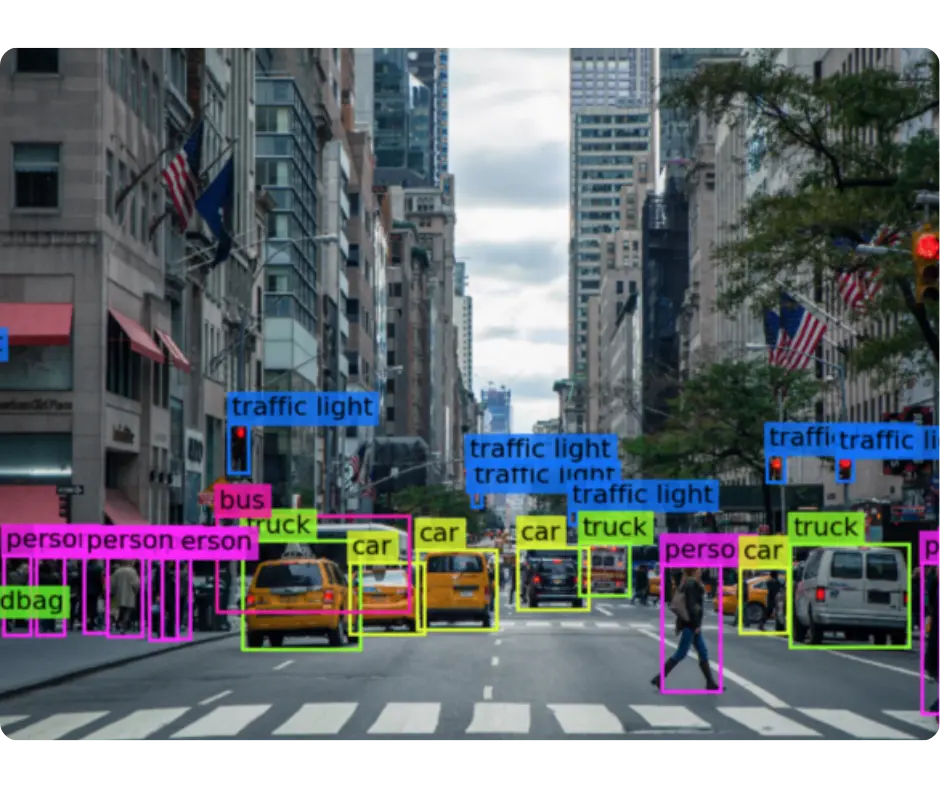
Object recognition:
Computer Vision systems are able to automatically detect and classify objects in images or videos.
Movement tracking:
They can detect and track the movement of objects in video or in real time.
Scene analysis:
Ability to analyze complex scenes and understand the context of images or videos.
Face detection:
Computer Vision can automatically detect and recognize people's faces in photos or videos.
Convert images to text:
The systems can convert image content into text format, which opens up wide opportunities for automating data processing.
Who is Computer Vision for?
Computer Vision is a useful tool for various fields of activity:


Trade enterprises:
It helps automate production processes, control product quality, and detect anomalies in production. It helps to analyze customer behavior, recognize products and improve remote shopping processes. With the help of Computer Vision systems, businesses can automate and optimize their processes, increasing efficiency and competitiveness.

Medical institutions:
It is used to diagnose and analyze medical images, detect pathologies, and assist in surgical operations.

Security and supervision:
It is used to detect security violations, track the location, and identify people in video footage.

Educational institutions:
It can help educational institutions automate processes, such as recognizing and verifying student documents, monitoring student attention span during classes, and detecting student activity in the classroom to improve the learning process.

Financial institutions:
It can be used to automatically recognize and classify financial documents, detect fraud and anomalous transactions, and analyze customer behavior to improve personalized service.

Contact centers:
It can help automate the processes of processing and analyzing a large flow of data, such as video conversations or video recordings of customer calls, to identify emotional tone and respond effectively to user requests

Podcasters and media:
It can be useful for automatically indexing and tagging video and audio, recognizing faces and objects in images to improve content search and categorization, and creating interactive and engaging multimedia conten
Why DMI?
Deep context understanding:
Our assistant doesn’t just search by keywords; it understands the meaning of queries and business logic, providing accurate answers based on your company’s context.
Adaptation to business specifics:
We train AI models on your internal regulations, documentation, and knowledge bases, creating a unique solution tailored to your industry
Seamless integration:
The system easily connects to your existing IT infrastructure (CRM, ERP, task managers), providing a unified workspace for data management
Corporate data security:
We guarantee the protection of confidential information. Option to deploy the solution on your servers (On-Premise) or in a secure cloud
Routine operations automation:
The assistant performs actions, not just answers questions: automatically generates reports, assigns tasks to employees, and fills out documents
Multilingual support for global teams:
Support for over 30 languages enables international offices to work in a unified information space without language barriers
Work with any data types:
DMI processes and analyzes information from various sources: text documents, PDF files, spreadsheets, audio recordings, and images
Scalability and flexibility:
The solution architecture allows for easily adding new features, departments, and scaling workload as your business grows